
For property sellers · Updated 13 October 2026
What should you repair before selling your home?
Begin with the condition of the property. Clear findings help you decide what needs investigation, what needs attention and what is an optional presentation choice.
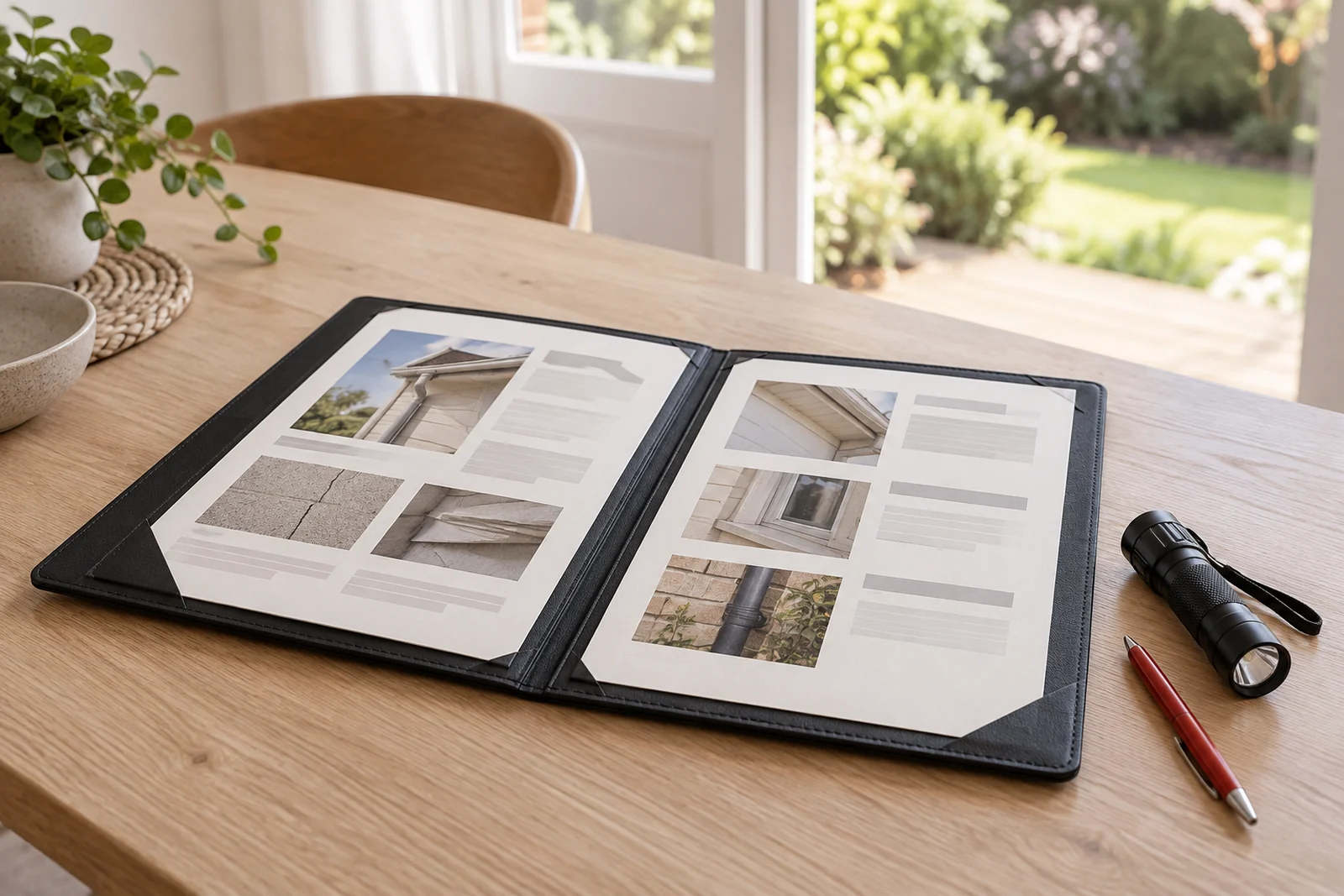
Understand the findings before choosing work
A pre-sale inspection helps you understand the home's visible condition before deciding what to do. Start with the observation, its location and the recommended next step. A rating alone does not specify the cause, the full repair scope or its cost.
Ask the inspector to clarify findings you do not understand. Where a report recommends further investigation, obtain that assessment before committing to a repair based on an assumption. For example, a stain near a wet area can warrant investigation without establishing the source of moisture.
Use the report guide to distinguish condition ratings, unavailable access and recommendations. Keep the full report available for trades so they can understand what prompted the enquiry.
Separate urgent concerns from presentation choices
Prioritise findings that concern safety, active deterioration or a recommendation for prompt specialist assessment. Ask the appropriate professional what interim action and timing are required. Do not delay an urgent safety assessment while deciding how to present the property for sale.
Then consider maintenance that can limit further deterioration. A drainage concern, recurring leak or damaged external element may need investigation before its repair can be specified.
Cosmetic improvements, such as fresh paint or replacing a dated fitting, are a separate decision. Discuss presentation with your selling agent after understanding condition concerns. A new finish should not be used to hide an unresolved issue.
There is no universal list of renovations that every seller should undertake. The property's condition, timing, costs and your plans determine what is sensible. An inspection does not promise that work will increase the sale price or produce a particular negotiation outcome.
Obtain specialist advice and comparable quotations
Use the professional or trade suited to the finding. Depending on the issue, this may involve a plumber, electrician, structural engineer or specialist pest inspector. Ask what investigation is needed to establish the cause and define the work.
When seeking quotations, provide the same information and ask each provider to describe the proposed scope. Check what is included, what remains uncertain, any approvals required and how additional findings will be handled. Compare the work proposed as well as the price.
A building inspection's defect rating and a repair quotation answer different questions. A finding described as major does not automatically establish a fixed repair cost, and an inexpensive repair does not automatically make a safety concern minor.
Keep a clear record of investigation and repairs
Keep the original report together with specialist assessments, quotations, invoices and photographs of completed work. Record the location, date and scope so another reader can connect the work to the relevant finding.
Where work changes or conceals an area, ask the relevant professional what completion records are appropriate. If further assessment is needed, arrange it rather than describing the issue as resolved without support.
Be precise about partial work. Repairing one identified item does not show that every related concern has been addressed. Records should explain what was done and what, if anything, still needs investigation.
Prepare accurate information for the sale
Discuss the findings and subsequent work with your agent and conveyancer. Your conveyancer can advise what information and obligations apply to your sale. Do not treat a voluntary pre-sale inspection as a replacement for required sale documents or other reporting obligations.
If you share an inspection report, provide the complete document and relevant follow-up records. Check its sharing and reliance terms. Buyers may still choose to arrange their own inspection and advice.
The purpose is to make considered decisions using clear condition information. You can then explain the work undertaken and remaining uncertainty without promising a home free of future repairs.
Understand the condition before you list
Gillon Builders provides a visual building inspection, photographs and a verbal explanation to support your preparation. Ask directly about specific findings and understand why further investigation or action has been recommended before deciding on work.