
For buyers and sellers · Updated 13 October 2026
Understanding your building inspection report
Your written report and photographs give you a clear record of the inspection. Talk through the findings, ask about the details that matter to you and understand what the observations mean for this home.
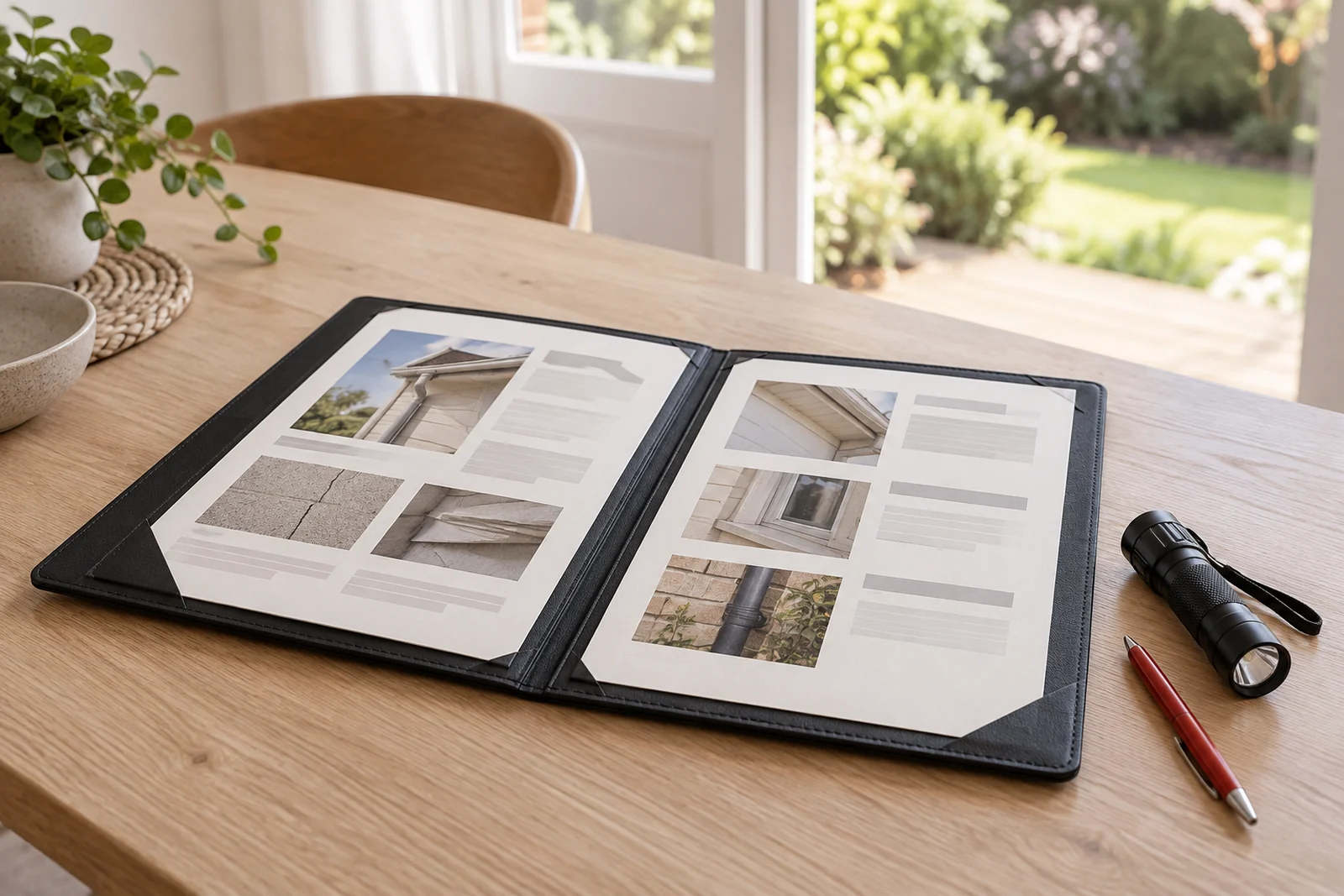
A clear assessment of the property
A useful report records areas in good condition alongside visible defects and maintenance concerns. Its purpose is to explain the condition observed at the inspection, with proportionate recommendations for what to do next.
Practical building experience helps put findings in context: how elements fit together, what visible workmanship reveals and where signs of damage warrant further investigation. Gillon Builders combines that knowledge with written findings, photographs and a verbal explanation.
A report you can talk through
Your report brings individual observations together into a clear picture of the home's visible condition. Item-by-item ratings distinguish areas in good or fair condition from those needing work, while the overall assessment considers the property's age and condition.
Photographs and written findings give you something concrete to refer back to when discussing the property. Buyers can use that detail to ask informed questions; sellers can use it to plan maintenance and prepare clear information before listing.
Speak directly with Gillon Builders during the verbal debrief and ask about the findings you want to understand. Practical building experience helps explain the observations in the context of your home, including why an action has been recommended and what needs further investigation.
The service is a visual building inspection of reasonably accessible areas.
Useful information on either side of a sale
When you are buying
Use the report to understand identified concerns and decide what further information you need. Read recommendations before making decisions about the property. Where work is identified, an appropriate specialist or trade can investigate and provide a quotation for the agreed scope.
When you are selling
An inspection before listing gives you time to understand findings, consider maintenance and prepare for questions. Keep the complete report and any records of subsequent investigation or work together so the condition information remains clear.
The assessment should be consistent whoever commissions it. A report does not promise a sale price, a particular negotiation outcome or a home without future repair costs. Buyers may also choose to commission their own inspection.
Read the finding, not just the rating
Start with the report's rating key. The item categories in Gillon Builders reports distinguish good or fair condition, no visible problems, work needed, immediate attention and unavailable access. These categories describe different observations; they are not interchangeable.
- Good or fair condition: read any accompanying comments about the condition observed.
- No visible problems: no problem was identified in the accessible area. This does not establish the condition of concealed parts.
- Work needed: read which item is affected, the explanation and the recommended next step.
- Immediate attention: discuss the finding promptly and follow the recommendation for further assessment or work.
- Unavailable access: the area was not assessed. Ask what access is needed and whether another inspection is appropriate.
An overall condition rating provides a summary in the context of the property's age and condition. It does not replace individual findings or specialist advice. A favourable overall rating does not cancel a specific item needing attention.
Defect ratings, repair costs and contract decisions
Reports from different providers may use different rating systems. Read the definitions in the report you have received. Do not treat another report's terms, such as major or minor defect, as an automatic match for Gillon Builders' item categories.
A classification describes a finding within that report's system. It does not, by itself, establish the repair cost, the complete scope of work or whether your contract gives you a right to withdraw. Ask an appropriate specialist about investigation and repair; ask your conveyancer about contract terms and decisions.
The same distinction matters when reading an alarming summary. Discuss the location, observed condition, significance and recommended action before assuming either that a repair is simple or that the property must be rejected.
Put observations in context
For each concern, look for the location, the visible condition, supporting photographs and the recommended action. A photograph helps explain an observation; the written finding explains its significance.
Maintenance, visible damage and a condition requiring further investigation can call for different responses. Ask for clarification if the significance is unclear. The report should describe what is known and identify uncertainty without assuming the worst or dismissing a concern.
Illustrative examples: reading a finding in context
These are illustrative teaching examples, not a client report or a diagnosis of a property. They demonstrate how to read an observation and its limits; they are not an official report format or a defect classification.
Example: downpipe discharge beside a wall
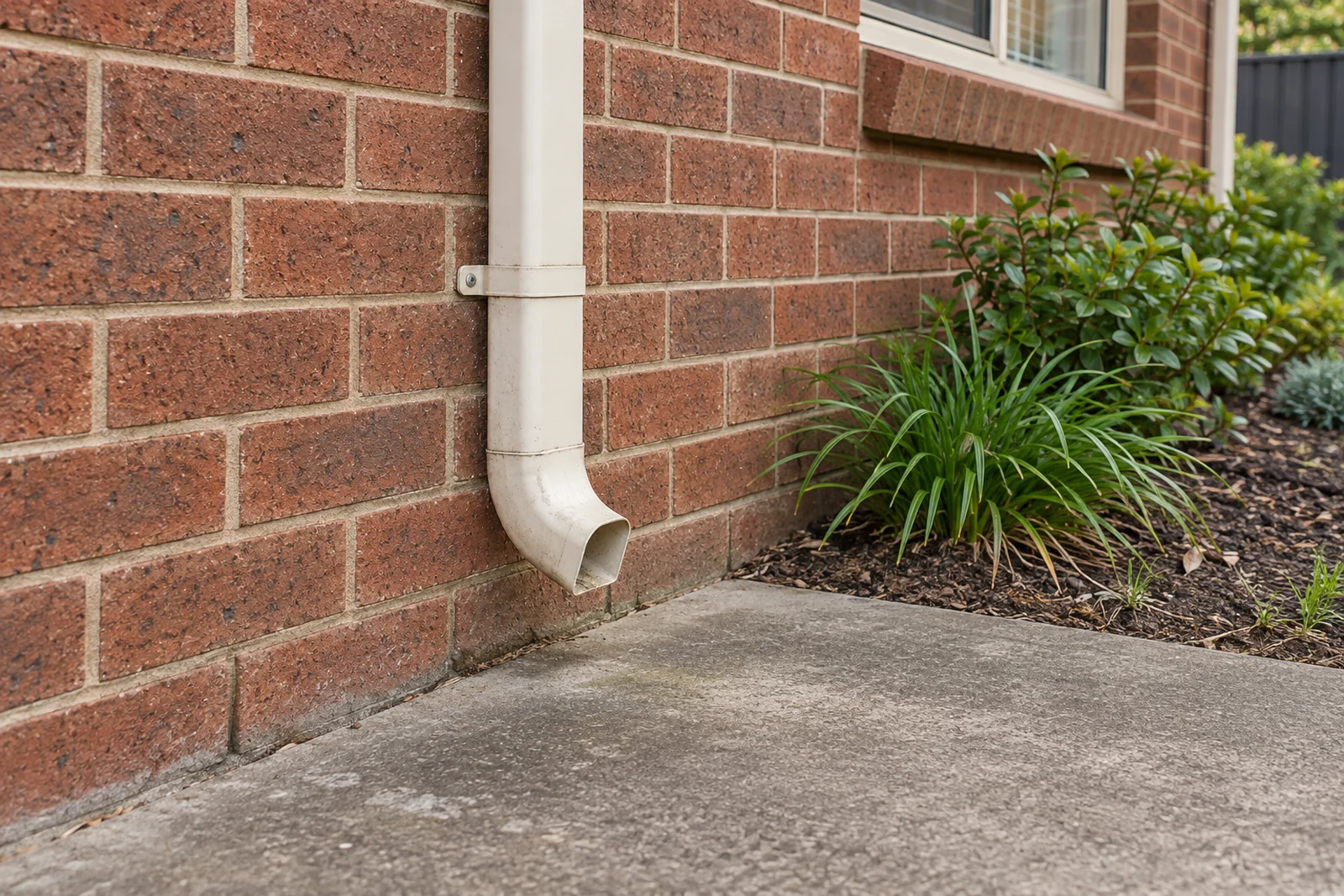
Outside, at the base of the brick wall beside the downpipe.
The visible downpipe ends beside the wall, with no connected drain visible in the example.
Water may discharge near the building. The drainage arrangement warrants assessment.
Ask an appropriate plumber to assess drainage and specify any necessary work.
The visible discharge arrangement does not establish concealed foundation damage, underground drainage condition or the repair cost.
Example: a mark near a wet area
A mark is visible on the wall beside a bathroom doorway. The report identifies the location and records the visible condition.
The mark warrants discussion and appropriate investigation. Ask what was observed and which specialist assessment is recommended.
A mark alone does not establish an active leak, its source, waterproofing failure or damage behind the wall. Further assessment determines what can be concluded.
Example: roof-space access unavailable
The roof-space hatch could not be accessed because the approach was blocked.
The roof space was not assessed. Ask what safe access would be required and whether a further visit is appropriate.
Unavailable access is not a finding of no visible problems. Comments about the roof exterior do not establish the condition of the roof structure inside.
Turn findings into clear next steps
- Review the findings and photographs to understand the property's condition.
- Discuss unclear findings during the verbal debrief or contact Gillon Builders for clarification.
- Arrange recommended further investigations and quotations from appropriate specialists.
- Keep reports and records of subsequent work together when discussing the property.
Ask your conveyancer about contract decisions or how a report can be used in your particular transaction.
Questions to ask during the debrief
Have the report open so you can discuss a specific location, photograph and recommendation. Useful questions include:
- What was directly observed, and what remains uncertain?
- Which findings need prompt attention or specialist assessment?
- Which areas were inaccessible, and what would allow further assessment?
- Who is suited to investigate the issue or quote the work?
- What information should I obtain before making a decision?
A debrief should help you understand the report. It does not replace further investigation where that has been recommended.
Questions about a finding
Contact the inspector with the report item and location, relevant photographs and dates, and a clear explanation of your question. Include any specialist assessment or records of work that relate to the concern. This gives the inspector the information needed to address a specific observation.
If a concern may require urgent safety action, obtain appropriate specialist advice promptly. For questions about a purchase contract, legal rights or a dispute, speak with your conveyancer or legal practitioner. Keep the report and correspondence together.
Arrange a building inspection
Discuss your property and inspection requirements with Gillon Builders. Whether you are preparing to buy or sell, the starting point is a clear understanding of the building's condition.
Prefer to talk?
Call Gillon Builders to discuss your property and the questions you want answered. Your inspection includes a written report, photographs and a personal explanation of the findings.
Call 0418 338 584Prefer to enquire online?